Scroll
Explore Life at LINE
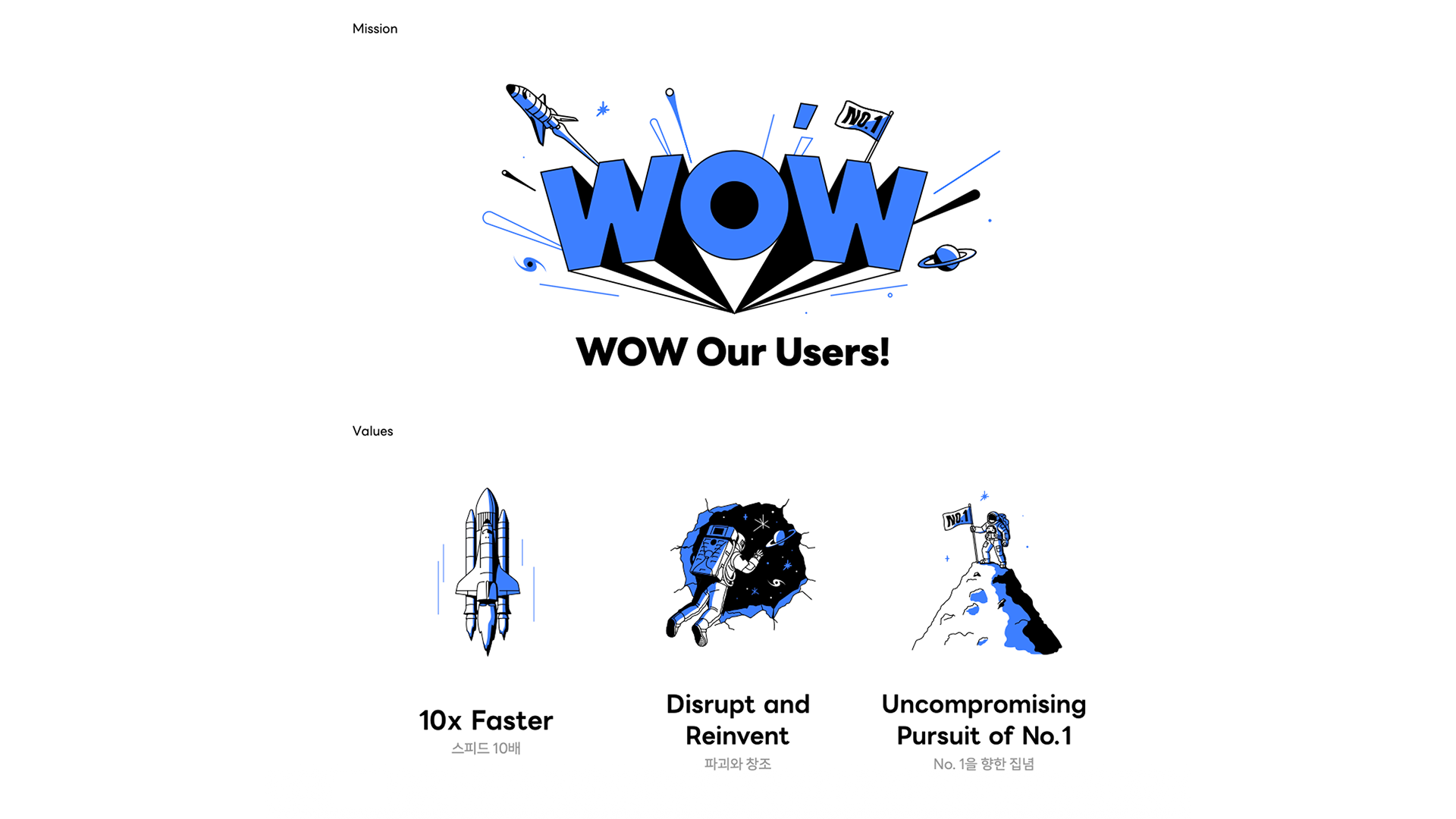 Mission & Values Mission WOW Our Users! By “WOW”, we mean “an unprecedented experience that you just have to share with others.”WOW doesn’t mean achieving 100%. It means aiming for 120% or more.Only services that users find truly captivating and essential can survive.Therefore, we need to think from the users’ perspective when creating a service, at every step from start to end.We must constantly ask ourselves, “Does the user truly want this?” and “Does this provide greater convenience?”.Throughout the process, we should always be thinking in terms of “how” we’re achieving our goals, not just “what” we’re achieving.Furthermore, we must work in good faith in order to maintain and strengthen the high level of trust expected by both our users and our diverse range of stakeholders. Values “Values” refers to the way we need to work to achieve our Mission.We should embrace these Values, make them the core of how we work, and actively put them into practice to deliver WOW. 10x Faster In order to survive the fierce competition of the marketplace and ensure our users continue to choose us, we need to continually exceed our users’ ever-changing expectations — and that means getting a lot faster at everything we do. 10 times faster!The starting point is to truly understand the nature of our work and — based on a deep understanding of users, business models, and market structures — prioritize tasks accordingly, focusing on solving each problem at hand.Instead of clinging to perfection, we have to take risks, put them to the test right away, and revise them constantly according to how our users react.We must never settle for accepting the way things are now. We need to eliminate the unproductive meetings, excessive paperwork and other inefficiencies that get in the way of getting things done.It is crucial that we fundamentally reimagine our workflows, leveraging AI to dramatically boost our productivity.Moving 10x faster is the only way for us to survive in an ever-changing global environment. Disrupt and Reinvent In an ever-changing environment, the moment we become satisfied with our past successes, we can no longer survive.We must constantly question and re-examine the direction of our products and services, making user needs as the standard for our decision-making.We must ensure that half of our current work involves creating new value. For all our tasks, we must constantly ask ourselves if our current way of working is optimal, and constantly ask questions to find if there are better ways of getting things done.And, furthermore, we must free ourselves from the old ways of thinking and doing things, fearlessly getting rid of anything that does not lead to WOW.Only by obsessively disrupting and reinventing our past actions, can we create new value. Uncompromising Pursuit of No. 1 There is only one reason we aim for No. 1.It is to become the choice of users among a multitude of alternatives. Users will not choose a mediocre No. 2 or No. 3.Beyond simply striving to become industry leaders in terms of sales or growth rates, we must aim to create No. 1 services that provide an overwhelming experience for our users. We must establish a plan to achieve No. 1 and stay intensely immersed in the work, taking full responsibility throughout the entire process. No excuses! But rather focus on solving problems with grit and determination, digging deep to find ways to accomplish our goals.This becomes possible when we are firmly determined, as leading professionals in our field, to achieve outstanding results in our work, delivering outcomes that far exceed the expectations of our users, clients, and colleagues.In the fierce process to reach such a high standard, these hard-won achievements will come together, propelling us to an undisputed No. 1 position.
 How are designers turning AI into a real, practical tool? How are designers turning AI into a real, practical tool? At Creative Share Vol.31 – Designer_AI_Trial_and_Error.zip,we found some answers. By openly sharing their experiments and lessons learned, the team uncovered meaningful insights into how AI can best be used in their field. In this article, five team members reflect on the event and the synergy they worked hard to create. Maximum Impact: Limiting Presentations to 5 Minutes — Kim Daye (Event Lead) We wanted this Creative Share to be open to everyone in the company, not just designers. When registration filled up right away, it showed how much interest there is in learning more about the way designers work. To meet those expectations, we focused on sharing stories only designers could tell—especially practical tips about the AI tools we use and how we use them. Unlike previous sessions, this time we introduced the “Ignite” format: 20 slides, 5 minutes. The point is to be short and impactful, without dragging on—but also memorable. During rehearsal, we worried that five minutes might feel too short. But that sense of “not enough” actually sparked more conversations after the event. Many people said they liked getting practical tips in a short, low-pressure way. It was truly rewarding to see talented LINERs share their stories and inspire one another. Designers Using AI as a “Work Partner” — Kim Jinsun (Speaker Curator) In the AI era, I see designers as more than visual creators. They’re closer to ‘product makers’ who connect planning and development. Instead of aiming for a perfect answer from the start, they build their own strengths by quickly testing ideas, creating, and refining in a fast loop. And I believe the fuel for that loop is trial and error. That’s why I looked for designers who were willing to openly share their experiments—even the messy ones—with a smile. I reached out not only in Korea, but also to global design teams in Japan, Thailand, and Taiwan. I really wanted to show how boldly these designers are experimenting. At first, I wondered if everyone was truly using AI well. AI still struggles to meet the “perfect quality” LINE Design expects, and many designers prefer to speak through results rather than words. But once we got started, I was impressed. From organizing meeting notes to prototyping and research, they were already using AI as a real work partner. It made me realize that what designers want from AI isn’t “Do everything for me,” but rather, “Help me bring my ideas to life—faster and more flexibly.” What's this supposed to be? Bold? Italics? Of course, we shouldn't be using actual asterisks in the text. Why We Used the Term “Trial and Error” in the Event Title — Noh Yuri (Event Planning & Promotion) When it comes to AI, almost no one uses the output exactly as it is. People usually fall into two groups: “Should I try one more time?” or “I’ll do it later.” We all know that in the AI era, survival means just trying it—but that’s easier said than done. I planned this event for people like me, who tend to put things off when there’s no clear answer. Instead of focusing on “perfect mastery,” we focused on having the courage to try—even if it means failing. The tone of the event was playful and approachable, from the title to the merchandise. Our graphic designer, Sojeong, created a cute character sweating and struggling—something anyone who has used AI can relate to. It made the whole event feel more friendly and fun. We even generated various shovel-themed images using AI for the key visual. Although they weren’t chosen in the end, Sojeong shared that fun experiment during her presentation as well. Designers from Korea, Japan, Thailand, and Taiwan in One Place — Jeon Eugene (Interpretation & Catering) With members from Korea, Japan, and English-speaking teams all in one place, smooth communication was our top priority. Since “using AI in design” can be a technical topic, we shared materials with the interpreters in advance and prepared closely together. Thanks to that, the global speakers’ presentations were delivered clearly and seamlessly. Having teams from different countries truly enriched the content, quality, and overall atmosphere. Personally, I was especially impressed by Nakatani’s “Beyond UI Design” and Natnaree’s “AI as an Instant Design Review Buddy.” Their creative experiments really stood out. I also remember the networking session before the presentations. At first, I worried it might feel awkward, but everyone naturally began sharing their own trial-and-error stories, and the room quickly warmed up. As a design event, we also prepared catering that was a treat for both the eyes and the taste buds. When people said, “It’s so hard to choose just one!” it made all the effort worthwhile. After the Event — Nam Sangeun (Streaming & Retrospective Meeting) After every project, we hold a retrospective meeting. It’s a time to keep what worked well and find ways to improve what didn’t. Since this event was streamed live online and offline for a global audience, we faced a few unexpected issues. Still, everyone agreed that the most impressive part was the teamwork—each person handled challenges calmly and flexibly in their own role. It naturally led to conversations about how much we relied on and trusted one another. Of course, we also found areas to improve, such as differences in presentation formats. By openly discussing these challenges and sharing ideas for improvement, we built a stronger foundation for the next event. We walked away with confidence that we’ll do even better next time (laugh). We’ll be back soon with an even more engaging and enjoyable Creative Share. Stay tuned! ※ The information in this content applies only to certain corporations, and may differ for other corporations.
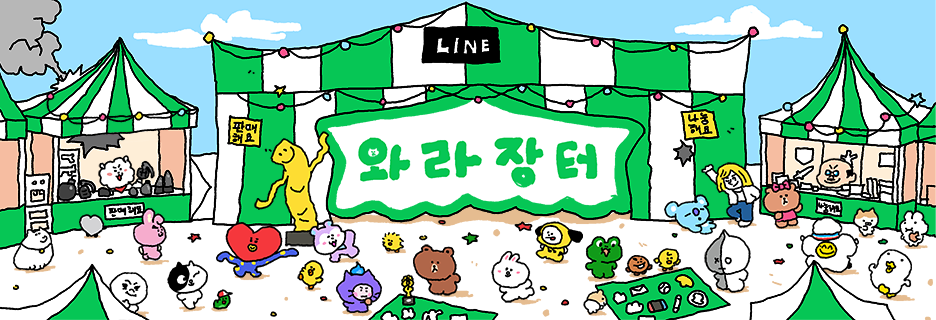 Introducing the LINE Flea Market For one summer day, the top floor of LINE’s office in South Korea transformed into a flea market called “Wara Market.” And, in turn, LINERs transformed, too, going beyond simply buying and selling items to connect with colleagues and share their interests and stories. Despite being the first event of its kind, the vibes and enthusiasm of both sellers and shoppers were incredibly high. Let's take a look at how the market fun went down. What is Wara Market? It's a flea market where LINERs gather to buy, sell, and share items. The name "Wara" has a double meaning — the word comes from an abbreviation of "WOW Library" in Korean, where the market was held, while also meaning "Come over!" The most important feature of Wara Market is that LINERs could come together, socialize and get to know each other. But, at the same time, it is a market, giving everyone the opportunity to buy or sell items they no longer used or things that might be useful to others — guitars, golf clubs, books, baby products, lamps, clothes, bags and more. There were even homemade crafts and fruits and vegetables grown by people’s parents! Such a Wide Array of Fun Things All told, Wara Market featured 14 booths, offering more than 200 items. And each booth had a creative name that was enough to make passersby stop in their tracks. [Booth Names / Items] Open for Business: Mom's hand-knitted bags, pet accessories A Second-Year Farmer's Overwhelming Vegetable Stand: Tender leafy greens, perilla leaves, cabbages grown from seeds, organic arugula Deep Mountain Pine: Pine shoots grown from his father's pine trees Dollar Store Happiness: So many claw machine plushies (all won by the store operator) =SUM("Loan Interest"): This booth “excelled” in its wares, with luxury watches, sunglasses, and handcrafted bracelets Books Are Books! The Book Peddler: All sorts of books, magazines, and comics ... Buy Now or Regret Later! Treasure Hunting at the Market The market was full of fun, with uniquely decorated booths and artfully arranged items. LINERs quickly scanned the booths to spot treasures and were fast to snatch up their favorite finds. Spotlight on Popular Booths "Sally Seller Sally": The Legend of Selling Out in 8 Minutes: Featuring an array of board games, this booth was all sold out just 8 minutes after opening. "Dollar Store Happiness": This booth was so popular that a line formed even before the market opened. Some big spenders purchased multiple plushies in one go. "Kwak's Elephant Bakery": This professional-looking dessert booth featured homemade treats made by the seller's wife. The cute menu and selection of desserts showed impressive dedication. Whether it was colleagues enthusiastically promoting their teammate's booths, groups browsing together, or booths selling out in the blink of an eye, Wara Market was more than just buying and selling. Perhaps what we really exchanged weren't "items" but "stories" between colleagues. From the sellers sharing their goods to the eager shoppers shopping with gusto, everyone was very pleased with the fun event. Each item carried its own story, and it was these stories that ultimately touched hearts. As the market wares passed from one LINER's hands to another's, connections were made. Thanks to the market, an ordinary day became warmer and more friendly. There will certainly be more Wara Markets in the future, so keep an eye out for the return. ※ The information in this content applies only to certain corporations, and may differ for other corporations.
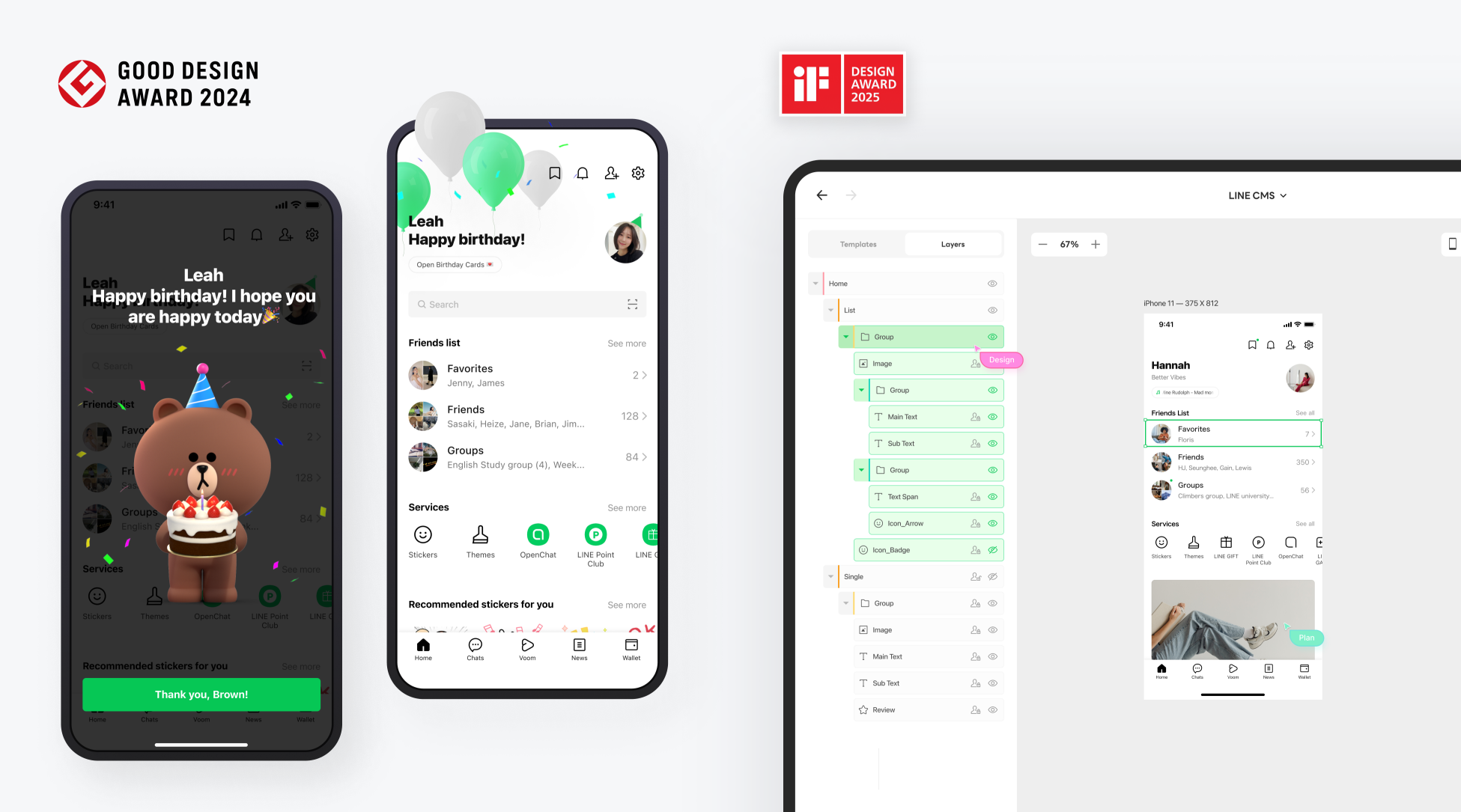 Journey to Global Design Awards This article is part of the LINE PRODUCT DESIGN newsletter (ON-LINE LETTER). INTERVIEWEESeungjun Park [MUX Interactive Design], Garam Bae [Main Product Design 1],Seunghee Chung [Common UX], Gain Lee, Hyunji Rhee [Advanced UX 2], Sangeun Nam [Design Relations] What's the secret to consistently performing well in international design competitions? Looking at recent achievements by LINE Product Design, they won the Good Design Award for LINE Seasonal Effects in 2024 and the iF Design Award for LINE CMS (Content Management System) and LYP Premium in 2025. We talked to some of the inspiring individuals who brought these features to life, asking them about how they find motivation in work and life and their experiences participating in these competitions. From left to right: Designers Seungjun Park, Garam Bae, Seunghee Chung, Gain Lee, Hyunji Rhee,and Design Facilitator Sang-eun Nam. First, congratulations on the awards! Let's start with the Seasonal Effects team. Can you tell us about the service? Seungjun: We offer a range of animated styles for LINE profile areas during global events like Christmas and Halloween, as well as national holidays and user birthdays. This feature was introduced to make the Home tab more user-centric, allowing users to celebrate special days meaningfully while getting closer to the LINE service. This could be a great way to reach out to friends or family you haven't talked to in a while. Garam: Exactly. We take it a step further by guiding users through each event. For example, through the Action Button, you can send gifts on Valentine's Day or make donations during times of need. When designing the interface and flow of Seasonal Effects, we paid close attention to ensuring visual harmony with existing elements and seamless integration within the app. That seamless connection is really important, isn't it? Garam: Yes, especially in Japan, where people are really into celebrating special occasions. Events tied to the LINE Gift Shop have been well-received. We've seen about a ninefold increase in Home Access NPU (new purchasing users) and a threefold rise in RPU (conversion of non-purchasers), contributing to GMV (gross merchandise value). One memorable event was Mother's Day, where we achieved a significant GMV of 900 million yen! Connecting visual effects with content and services within the LINE platform provides an immersive experience. How do you create animations that grab attention? Seungjun: I always think about animations that are easy to understand but also spark curiosity, making users want to click. I want them to feel like a gift to the user. Animations that make your fingers itch to tap? Seungjun: Exactly. We research and study the movements of objects and characters in detail. For animals or people, we pay extra attention. For Christmas 2023, we had graphics of Santa and Rudolph loaded with gifts. I remember analyzing countless videos to see how deer run. If Rudolph's movements looked awkward, it would ruin the overall effect. We reworked it three times to get it just right, and I'm really satisfied with the natural result. It's one of my favorite projects. Like an unexpected gift, it brings joy during New Year, birthdays, and other celebrations. I heard your passion for the project led to entering the competition. How was the second round of the Good Design Award's in-person judging? Garam: It was really, really tough (laughs). We took all the devices, including monitors, to Japan. Setting up our work on-site was challenging, but it was great to see all the other entries. It was quite fun to look around.Seungjun: It was the middle of summer, and there was no air conditioning in the setup area. Ha ha. But thanks to Garam's meticulous preparation and communication, our booth was one of the most well-organized and eye-catching. It's a cliché, but hard work really does pay off. Do you remember the day you heard about the award? Garam: Seasonal Effects was a collaborative effort involving product design, 2D and 3D graphics, and motion designers. Winning the 2024 Good Design Award felt like a reward for everyone's hard work. I was really happy, and the teamwork with Seungjun was great. I hope I wasn't the only one who felt that way!Seungjun: From 2022 to early 2025, we gathered a lot of data and insights. We entered the competition because it felt like a waste to keep our work hidden. It meant a lot to have our efforts recognized. Having Garam, a trusted colleague from the start, made it all possible. Let's keep working together! Designed to help LINE employees easily create, edit, and publish content, the LINE CMS. You can really feel the strong camaraderie (laughs). Now, let's move on to the CMS team, known for their teamwork. Can you briefly introduce the service? Seunghee: The LINE CMS is an internal content management system created by and for LINE employees. It allows designers, planners, and developers to create, edit, and distribute content using modular templates without needing coding expertise. By combining pre-designed templates, users can easily and consistently produce LINE-style content. What sets CMS apart from other tools? Gain: As Seunghui mentioned, the use of templates allows for quick content creation while maintaining consistency. The optimized publishing process reduces workload and minimizes errors. It also features an intuitive layer panel UX, letting users view content hierarchy at a glance and move layers freely. Those are very important features! Tell us more about them. Seunghee: It's not just an internal tool; it's part of the LINE product suite, so we aimed to reflect LINE's identity in the design. We customized the icons and created UI elements like buttons, layouts, and interactions to match the LINE style, ensuring a visually complete and consistent design language.Hyunji: Additionally, the module preview feature is a standout. It lets you see how your module will appear in different global environments, allowing for informed adjustments. It's like we've systematized LINE's global service development expertise (laughs). Like website builders Wix and WordPress, CMS is easy to use without coding knowledge. Since we're on the topic, what special considerations did you have for global users? Seunghee: We focused on design localization optimized for each target country's language. It's not just about supporting multiple languages; we considered fonts, spacing, and UI layout specific to each language. This led to the creation of the "Multilingual Library," allowing us to easily create multiple language versions from the same template, providing a consistent and seamless UX for global users. How have your colleagues reacted to using it? Hyunji: We wanted it to be a tool anyone could use immediately, regardless of their role, without needing extra training. We made options like "Space Around" and "Space Evenly" visually intuitive with icons and grouped design properties more intuitively.Gain: Since the system significantly changed how content is managed, we've received a lot of positive feedback. It made us curious about what people outside of LINE would think of our system, so we decided to enter the competition. Entering an award is a big effort. How was the experience? Hyunji: I think many designers dream of winning an international design award. I joined in thanks to Gain and Seunghui's enthusiastic proposal. I'll never forget the last week before the deadline when we worked online late at night, chatting over our midnight snacks (laughs). We shouted, "Finally done!" only to find another typo after a short nap. It was funny and memorable. Continuously identifying and adding features to meet the needs of LINE employees. You achieved your goal by winning at the German iF Design Award 2025. How did that feel? Gain: Projects like designing internal tools don't get much attention most of the time, so it was thrilling to have our CMS officially recognized as a valuable system for users.Seunghee: I shared the award news with colleagues from Korea and Japan at a workshop in Tokyo this February and they were genuinely happy for us. While external recognition is nice, the cheers and support from my closest colleagues, who've been with me since the launch, are incomparable. Their encouragement was a huge motivator. The artist Olafur Eliasson said: "Experience is not what happens to you; it's what you create." As a facilitator who helped put together the design award entries, any final thoughts? Sangeun: Having your project evaluated for its design strengths by renowned designers is a huge advantage. Winning top awards like the Grand Prix or Best 100 means support for attending ceremonies in places like Germany and Japan, offering opportunities to network with global designers. It's not easy to take on new challenges, but it's a great opportunity. It's important to seize the moment and enjoy the experience. Discover more stories from LINE PRODUCT DESIGN through our newsletter! Subscribe Here